
Helping Parents Downsize
A Compassionate, Organized Approach to a Major Life Transition
Downsizing with aging parents is one of those moments that blends practicality with deep emotion. It’s never just about sorting belongings or packing boxes—it’s about honoring memories, easing future burdens, and creating a living space that supports comfort and independence. When approached thoughtfully, this process becomes an opportunity to strengthen family connections, preserve stories, and help parents feel supported rather than overwhelmed.
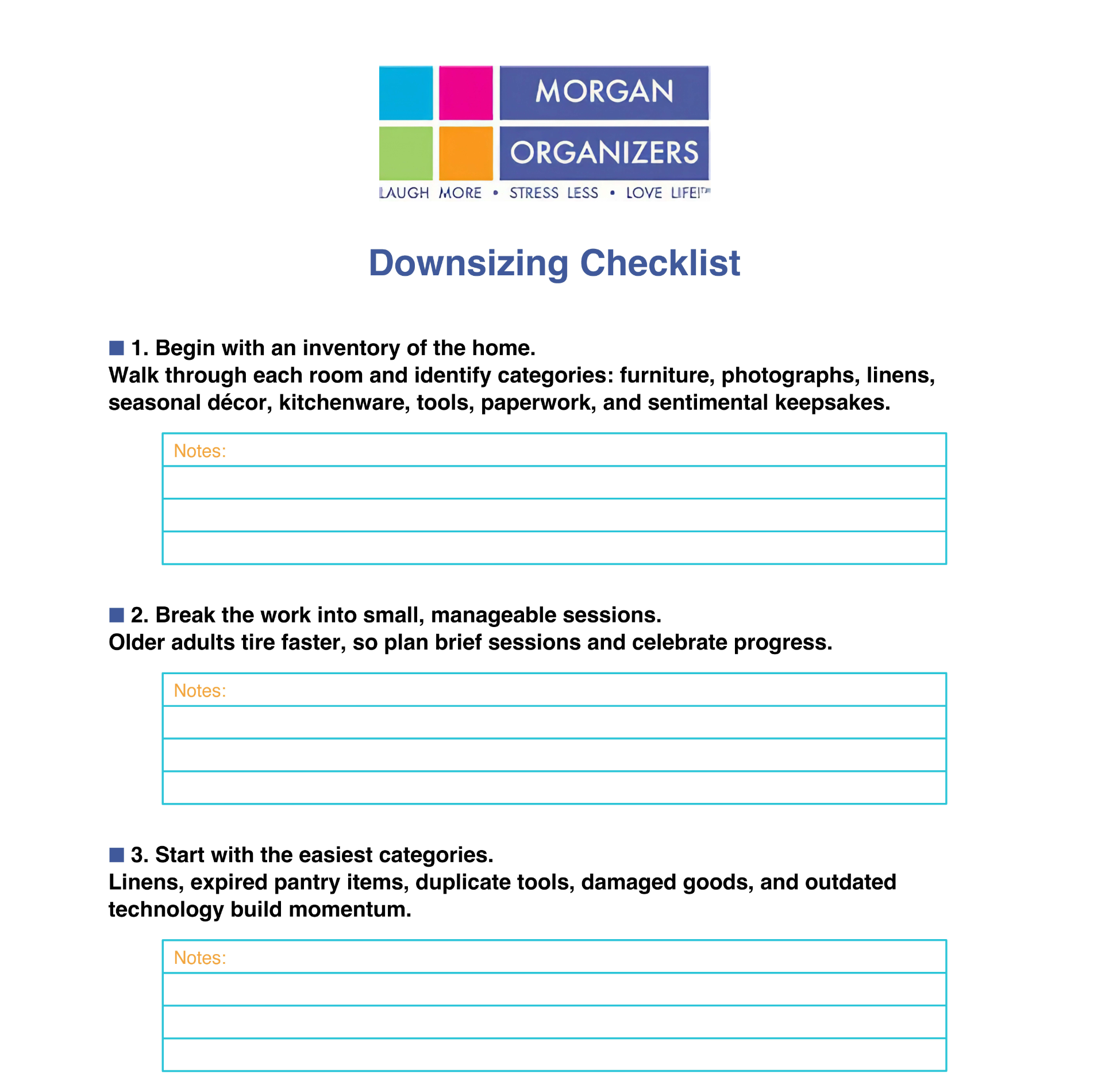
This is a two page checklist. Click the download button to see the entire document.
Here is a helpful guide for helping parents downsize with clarity, respect, and gentle organization.
Understanding the Emotional Landscape
Downsizing is rarely just a home project; it’s a significant life transition. Parents often feel a swirl of emotions—nostalgia, pride, uncertainty, grief, or even embarrassment at the amount of accumulated “stuff.” What looks like clutter to an outsider can represent decades of identity: hobbies, family life, career milestones, travel, and friendships.
Before any sorting begins, sit with your parents and ask about their vision for this next chapter. Do they want a simpler space? Less upkeep? To be closer to grandchildren? To reduce physical burdens? Starting with their why helps anchor decisions in their own values, not outside pressure.
It’s also important to acknowledge that letting go of belongings—especially lifelong collections—can feel like losing parts of themselves. Gently remind them that the memories stay even when the item is gone, and that the goal is not to erase the past, but to make room for comfort and peace in the future.
Create a Thoughtful Organizational Plan
Approach downsizing like any important project: with structure, clarity, and realistic pacing.
1. Begin with an inventory of the home.
Walk through each room and identify categories: furniture, photographs, linens, seasonal décor, kitchenware, tools, paperwork, and sentimental keepsakes. An overview helps you create a step-by-step plan rather than bouncing from one area to another.
2. Break the work into small, manageable sessions.
Older adults tire faster, and decision fatigue is real. Plan short sessions—one closet, one drawer bank, or one category at a time. Celebrate each completed section to help keep morale high.
No sound
3. Start with the easiest categories.
Linens, expired pantry items, duplicate kitchen tools, damaged household goods, or outdated technology are a great beginning. These usually have less emotional weight and build momentum before tackling heirlooms or memorabilia.
4. Sort by category, not by room.
Gather all similar items together so decisions are easier. For example, bring every blanket in the home into one place so you can decide how many are truly needed. This reduces repeat decision-making and cuts down on storage confusion.
5. Use a simple labeling and container system.
Clear bins or laundry baskets labeled Keep, Donate, Recycle, and Family provide immediate structure. Parents appreciate knowing that kept items will have a dedicated place, and donated items will serve others.
6. Document important items before letting them go.
Take photos of special pieces—handmade crafts, children’s artwork, awards, family heirlooms no one wants but everyone remembers. Creating a digital memory book helps preserve the emotional meaning without the physical weight.
Honoring Sentimental Belongings
Sentimental items require a gentler, slower tempo.
If your parents struggle with letting something go, ask questions that open conversation rather than force a decision:
No sound
Professional Support:
If the home is especially full, Morgan Organizers is here to help. We bring neutrality, efficiency, and compassion to every transition, easing family tension by taking on the emotional and logistical weight of sorting and organizing this important move.
Community Resources:
Veterans’ groups, churches, senior centers, and local charities often provide pickup services for donations. Knowing that items will be used by people who truly need them brings comfort and purpose to the process.
Creating a Safe, Comfortable New Beginning
The final step of downsizing is helping your parents settle into a space that feels fresh, comforting, and easy to navigate. Set up their new home with intention: limit clutter, add familiar décor, label key drawers or bins, and ensure pathways are clear.
Remind your parents that downsizing doesn’t mean shrinking their lives—it means creating room for new experiences, easier days, and meaningful connections.
When done with compassion and organization, downsizing becomes a gift: the gift of safety, clarity, peace, and the knowledge that the next chapter begins with support and love.