Fresh Starts: How to Begin with Downsizing
Downsizing is often described as a practical response to change, but at its core, it is a process of transition. Whether prompted by a move, a new life stage, seasonal shifts, or a desire to simplify daily routines, downsizing involves both physical decisions and emotional adjustments. Approached intentionally, it can reinforce calm, improve functionality, and create environments that better support daily living.
This article outlines how to begin downsizing in a structured, manageable way, with an emphasis on maintaining calm throughout the process. It also explains how MORGAN ORGANIZERS supports clients by bringing experience, trust, and compassion to each step.
Understanding Downsizing as a Process
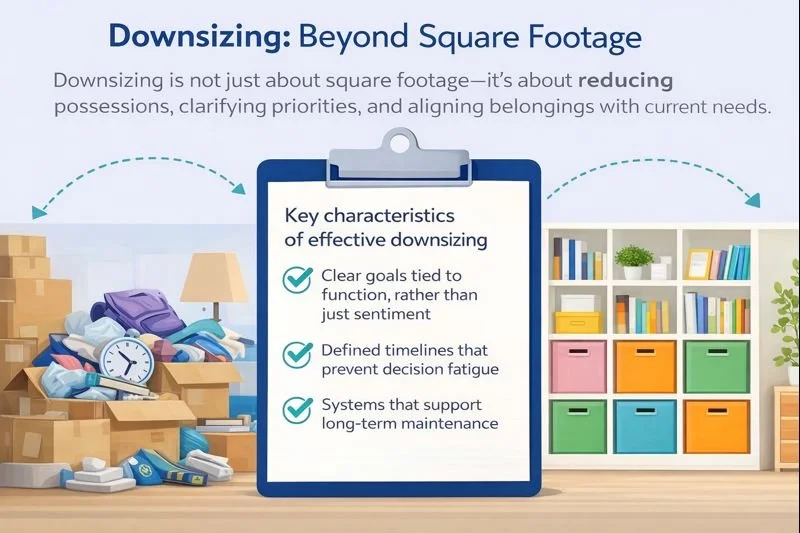
Downsizing is not defined by square footage alone. It includes reducing excess possessions, clarifying priorities, and aligning belongings with current needs. Research in environmental psychology consistently shows that cluttered spaces can increase cognitive load and stress, while organized environments support focus and emotional regulation. For this reason, downsizing is best approached as a gradual, methodical process rather than a single large task.
Key characteristics of effective downsizing include:
Clear goals tied to function rather than sentiment alone,
Defined timelines that prevent decision fatigue, and
Systems that support long-term maintenance.
Viewing downsizing as a series of small, intentional steps helps reduce overwhelm and reinforces a sense of control.
Beginning with Calm: Preparing Before You Sort
Before any items are removed, preparation is essential. Establishing calm at the outset improves decision-making and reduces frustration later in the process.
Set a defined purpose.
Clarify why downsizing is occurring. Common reasons include relocation, retirement, seasonal transitions, caregiving changes, or simplifying routines. A clearly stated purpose serves as a guide when decisions become difficult.
Work in limited time blocks.
Short, focused sessions—typically 30 to 60 minutes—support sustained attention and reduce emotional fatigue. Breaks between sessions allow the brain to reset.
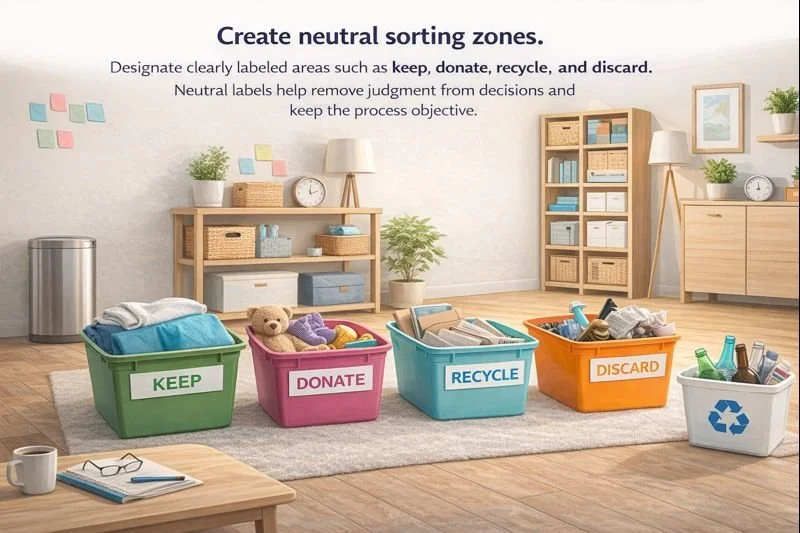
Create neutral sorting zones.
Designate clearly labeled areas such as keep, donate, recycle, and discard. Neutral labels help remove judgment from decisions and keep the process objective.
Practical Steps for Downsizing Effectively
1. Start with Low-Emotion Categories
Begin with items that carry minimal emotional attachment, such as duplicate kitchen tools, outdated paperwork, or unused linens. Early success builds momentum and confidence.
2. Focus on Function First
Ask how an item supports daily life now, not how it was used in the past. Downsizing prioritizes present function over historical utility.
3. Use Clear Criteria
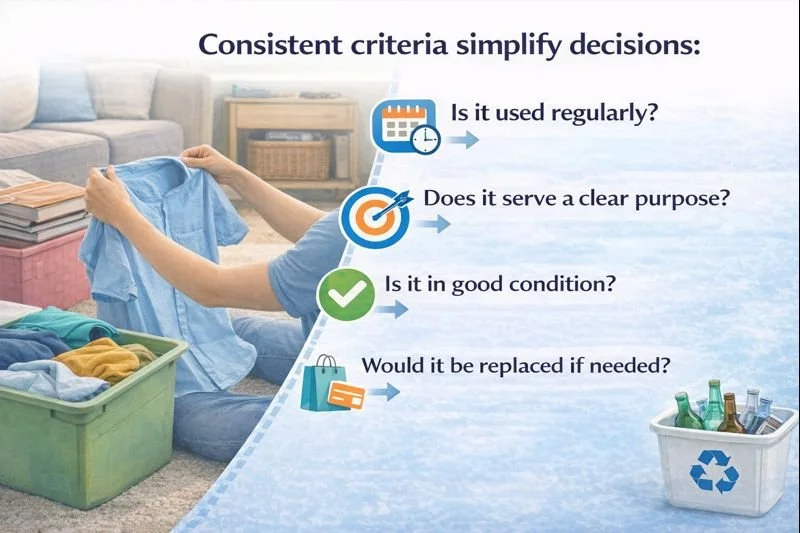
Consistent criteria simplify decisions:
Is it used regularly?
Does it serve a clear purpose?
Is it in good condition?
Would it be replaced if needed?
4. Limit “Holding Areas”
Temporary storage can delay progress. Items placed aside “just in case” should be reviewed within a defined timeframe to avoid reaccumulation.
Seasonal Changes as Built-In Checkpoints for Downsizing
Seasonal transitions naturally disrupt routines, storage patterns, and daily habits. These disruptions create ideal moments for reassessing belongings because needs shift without requiring artificial deadlines. Rather than approaching downsizing as a single large effort, seasonal checkpoints allow decisions to be distributed across the year, reducing fatigue and supporting calm, consistent progress.
Each transition invites a different type of evaluation—what is needed now, what is no longer serving a purpose, and what systems need adjustment to remain functional.
Winter to Spring: Lightening, Refreshing, and Resetting
The transition from winter to spring often brings increased daylight, more activity, and a desire for visual and physical lightness. This season supports releasing items tied to cold-weather routines and prolonged indoor living.
Primary focus areas
Heavy coats, boots, scarves, and gloves
Holiday décor and seasonal storage bins
Indoor equipment used primarily during winter months
Key downsizing actions
Review winter clothing for fit, condition, and frequency of use. Items not worn during the past season can be evaluated objectively.
Reduce holiday décor to what is actively used and easily stored. Excess décor often contributes to crowded basements and closets.
Reassess indoor hobbies or equipment that were used temporarily and no longer align with current routines.
System reinforcement
Rotate clothing storage so spring and summer items are more accessible.
Clean and label storage bins clearly before returning them to long-term storage.
Use this season to reset closets and storage rooms rather than expand them.
This transition supports both physical decluttering and mental clarity, reinforcing a sense of renewal without urgency.
Spring to Summer: Functional Use and Outdoor Readiness
As activities move outdoors, storage areas such as garages, sheds, and entryways become more active. This season is ideal for evaluating items based on actual use rather than intention.
Primary focus areas
Outdoor gear (sports equipment, gardening tools, recreational items)
Seasonal footwear and outerwear
Vehicles, garages, and utility storage spaces
Key downsizing actions
Group outdoor items by activity and assess whether each item supports current interests and routines.
Remove duplicates, broken equipment, or items that require maintenance but are no longer used.
Evaluate seasonal footwear and accessories for comfort, condition, and relevance.
System reinforcement
Create clearly defined zones for outdoor activities (gardening, recreation, maintenance).
Store items vertically or in transparent containers to improve visibility.
Ensure frequently used items are the most accessible.
Spring-to-summer downsizing emphasizes efficiency and safety, helping prevent overcrowding and reducing frustration during active months.
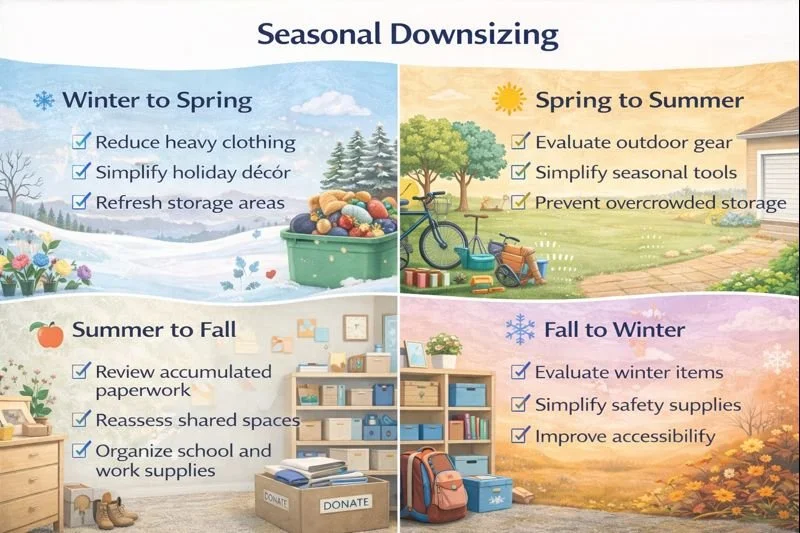
Summer to Fall: Structure, Schedules, and Shared Systems
Late summer and early fall introduce schedule changes that affect multiple areas of the home. This transition supports evaluating systems rather than individual items.
Primary focus areas
Paperwork and documents
Shared household spaces
School, work, and activity supplies
Key downsizing actions
Review accumulated paperwork and establish clear retention guidelines.
Reassess shared spaces such as kitchens, entryways, and family rooms for functional flow.
Evaluate backpacks, supplies, and storage solutions to match new schedules.
System reinforcement
Create designated drop zones for daily-use items.
Simplify filing systems so they align with current needs.
Adjust storage locations to reflect how spaces are actually used during busier routines.
This season supports organizational clarity and reduces friction as households transition into more structured schedules.
Fall to Winter: Accessibility, Safety, and Efficiency
As routines slow and indoor time increases, preparing for winter focuses on ease of access and minimizing physical and cognitive strain.
Primary focus areas
Frequently used winter items
Emergency supplies and safety equipment
Storage pathways and accessibility
Key downsizing actions
Evaluate which winter items must remain immediately accessible.
Reduce storage clutter that blocks access to essential items.
Remove items that require frequent handling but no longer serve a purpose.
System reinforcement
Store heavy or frequently used items at waist level to reduce strain.
Ensure clear walkways and accessible storage during low-light months.
Simplify systems so they can be maintained with minimal effort.
Fall-to-winter downsizing emphasizes safety, comfort, and ease, supporting calm during periods of reduced energy and increased indoor time.
Why Seasonal Downsizing Supports Calm
Seasonal downsizing aligns decisions with real-world changes rather than abstract goals. By reassessing belongings in context, individuals reduce emotional conflict, decision fatigue, and system breakdowns.
Benefits include:
Smaller, manageable decision sets
Reduced pressure to “finish everything at once”
Systems that evolve naturally with routines
Over time, this approach supports long-term maintenance rather than repeated cycles of accumulation and overwhelm.
Seasonal downsizing reframes decluttering as a continuous, adaptive process rather than a one-time event. By responding to routine changes as they occur, households can maintain clarity, function, and calm throughout the year—without disruption or urgency.
This framework supports smoother transitions, more resilient systems, and environments that align with current needs rather than past habits.
Reinforcing Calm During the Downsizing Process
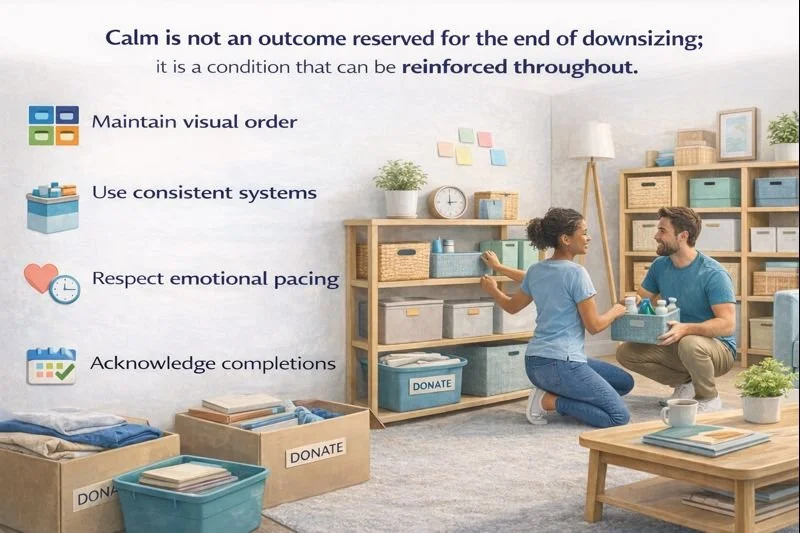
Calm is not an outcome reserved for the end of downsizing; it is a condition that can be reinforced throughout.
Maintain visual order.
Completing one small area at a time prevents visual overload and reinforces progress.
Use consistent systems.
Uniform storage solutions and clear labeling reduce mental effort and make spaces easier to maintain.
Respect emotional pacing.
Some categories require more time. Allowing for pauses supports emotional regulation and prevents rushed decisions.
Acknowledge completion points.
Stopping at natural milestones reinforces a sense of accomplishment and prevents burnout.
How MORGAN ORGANIZERS Supports Downsizing
MORGAN ORGANIZERS approaches downsizing as both a logistical and human-centered process. The focus is not solely on reducing items, but on creating systems that support clarity, calm, and long-term success.
Experience
MORGAN ORGANIZERS brings professional expertise in space planning, category-based organizing, and transition management. This experience allows for efficient workflows and realistic timelines tailored to each household.
Trust
Clients are supported in making decisions without pressure. Confidentiality, respect for personal boundaries, and transparent processes are central to every project.
Compassion
Downsizing often intersects with major life changes. MORGAN ORGANIZERS works with sensitivity, recognizing that possessions can carry meaning while still helping clients move forward with confidence.
Services are designed to educate clients throughout the process, ensuring that systems are understandable, sustainable, and aligned with individual needs.
Educational Benefits of a Guided Downsizing Process
Downsizing with professional guidance offers long-term educational value:
Clients learn decision-making frameworks they can reuse
Systems are designed for maintenance, not perfection
Skills developed during downsizing translate to daily routines
This approach empowers individuals and families to maintain calm, organized spaces long after the initial project is complete.
Visual Identity and Brand Alignment

MORGAN ORGANIZERS’s brand colors—blue, teal, green, pink, and orange—are intentionally associated with clarity, balance, growth, warmth, and energy. These colors are reflected in organizing materials, visual guides, and educational resources to reinforce a calm and structured experience. The Morgan Organizers logo serves as a visual anchor, symbolizing organized spaces built with care and intention.
A Measured Path to a Fresh Start
Downsizing is most effective when approached as a step-by-step process grounded in calm and clarity. By working in manageable phases, aligning efforts with seasonal transitions, and using consistent criteria, individuals can reduce stress while creating spaces that support current lifestyles.
With experience, trust, and compassion, MORGAN ORGANIZERS provides structured guidance that helps transform downsizing from an overwhelming task into a meaningful fresh start—one that supports calm, functionality, and long-term ease in everyday living. We are here to help.